Things We Did, Things We Didn't Do Embroidery Design Review
A First Look at the Design
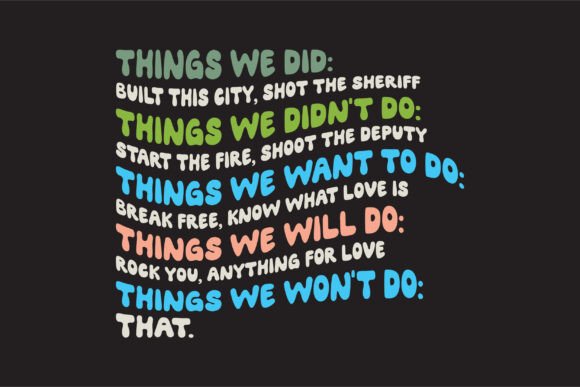
When I first saw Things We Did, Things We Didn't Do, I was immediately drawn to its thoughtful composition and minimalist yet impactful style. The word-art prints feel like a conversation starter—each line carries a sense of reflection, making it perfect for personal or handmade projects that want to convey depth without being overwhelming.
The design has a clean layout with deliberate spacing between each phrase, which gives it a modern and slightly philosophical vibe. It's not overly busy, so it works well for both small and larger embroidery applications. I can see this design fitting beautifully on items like tote bags, sweatshirts, or even as an embroidered patch on a jacket or apron.
Real-Life Application: A Custom Tote Bag Project
Let’s imagine using Things We Did, Things We Didn't Do on a custom embroidered tote bag. This is a common request among crafters and small shop owners looking for unique, statement pieces. The design's simplicity allows it to stand out on a natural canvas fabric, but I would be cautious about placing it on dark-colored materials unless the thread colors are carefully selected for high contrast.
I also considered how the design would stitch out in different hoop sizes. Since the text is spaced apart, it should handle well on medium to large hoops. However, if someone wanted to use it on a smaller item like a cap or a patch, they'd need to ensure the design isn’t too dense and that the stitch density remains consistent for clarity.
For a tote bag, I’d recommend testing the machine embroidery design on scrap fabric first to check how the satin stitch and fill stitch interact with the fabric texture. Using a proper stabilizer is essential here, especially if the fabric is thin or stretchy, as it will prevent puckering and maintain the integrity of the finished product.
Where This Design Shines
Things We Did, Things We Didn't Do feels like a versatile embroidery file that could work across multiple product types. For instance:
- Custom Apparel: Sweatshirts, t-shirts, or even baby clothes where a subtle, meaningful message is desired.
- Home Decor: Pillow covers, kitchen towels, or blankets where the design adds character without overpowering the space.
- Gift Items: Personalized gifts such as holiday embroidery, wedding favors, or nursery decor that carry emotional weight.
- Commercial Use: Small shop products, Etsy listings, or boutique branding that aim for a curated, thoughtful aesthetic.
This design could also serve as a printable mockup for digital product previews or design assets used in marketing materials for craft businesses. Its clean look makes it adaptable to various themes, from casual to more formal.
Considerations for Use
While Things We Did, Things We Didn't Do is visually appealing, there are some practical considerations to keep in mind before using it in a real project:
- Thread Color Contrast: If you're using this design on dark fabrics, make sure the thread colors provide enough visibility. Testing on different backgrounds is key.
- Stitch Density: Although the design is not overly complex, areas with dense stitching may require careful adjustment to avoid bulkiness, especially on thinner fabrics.
- Hoop Size: Confirm that your hoop size can accommodate the full design without stretching or distorting the fabric.
- Fabric Type: Avoid using this design on very textured or stretchy fabrics unless you're prepared to add extra stabilizers or adjust the stitch pattern.
Also, if you're planning to sell finished items or use this as part of a digital embroidery file for others, be sure to confirm licensing terms before proceeding. Some designs come with restrictions on commercial use, and it’s always better to be safe than sorry.
Final Thoughts and Embroidery Designer Notes
In summary, Things We Did, Things We Didn't Do is a well-crafted T-Shirt Designs collection that offers a great balance between minimalism and meaning. Whether you're creating a personalized gift, adding value to a handmade product, or building a brand around thoughtful embroidery projects, this design has potential.
As a designer, I recommend checking the stitch density and ensuring the thread colors match your intended fabric background. Always test the design on scrap fabric before committing to a final piece. And don’t forget to review the embroidery file details—like hoop size and machine compatibility—to ensure it fits your workflow and tools.
If you're an Etsy seller, small shop owner, or just a hobbyist looking to elevate your creative output, this design could be a valuable addition to your portfolio. Just remember to approach it with a critical eye and a bit of experimentation to get the best results.